Source customized laminate glass retractable roof for Building Furniture Door
Compare 30 listings for customized laminate glass retractable roof options featuring motorized control and weather resistance. Buyers can evaluate specifications like thickness, hardness, and installation methods from verified suppliers in China.
Key considerations
Products List




Comprehensive Sourcing Guide
Strategic Sourcing Guide for Customized Laminate Glass Retractable Roofs
Technical Specifications and Material Composition
When sourcing customized laminate glass retractable roofs, buyers must first distinguish between the structural frame materials and the glazing components, as these define the system's longevity and performance. The supplied product data indicates a diverse range of materials often utilized in these assemblies. The structural framework frequently utilizes Aluminum Alloy, specifically the 6063-T5 grade, which offers a balance of strength and corrosion resistance suitable for both freestanding and wall-mounted configurations. This alloy is often treated with customized surface finishes to match architectural requirements. In contrast, the glazing component is explicitly identified as laminated glass, with thicknesses ranging from 6mm to 60mm. This variation allows for structural integrity in large spans or specialized acoustic and safety requirements.
The core functionality of the retractable mechanism relies on motor control systems operated via remote control switches. These systems are designed to accommodate various installation methods, including freestanding, wall-mounted, wall-hanging, and semi-attach setups. The fabric components, when present in hybrid systems, are noted as polyester or PVC, with specific weights such as 850g/S.Qm for motorized awnings. However, for pure glass retractable roofs, the intermediate film is the critical layer that bonds the glass plies. The production technique is described as dry laminated glass, utilizing an intermediate film to ensure the structure remains solid even if the glass breaks. The outer tent waterproof index is observed to be less than 1000 mm in some configurations, suggesting that for high-performance glass roofs, buyers must verify specific waterproofing ratings beyond standard observations. The structure color is typically available in grey, white, or customized options, while the glass itself is often clear, though color customization is possible.
Compliance, Standards, and Certification Verification
Navigating the regulatory landscape for customized laminate glass is essential for ensuring safety and market access. The observed product data lists several international standards, including JIS, GB, EN, and ASTM. Specifically, ASTM is cited multiple times as a relevant standard for these products. Buyers should verify that the specific laminate glass and the retractable mechanism comply with the ASTM standards applicable to their region, particularly regarding wind load, snow load, and impact resistance. The data also references EN standards, which are critical for European markets, though specific EN12150 values are noted as low-confidence background information and should not be assumed without direct supplier confirmation.
Certification plays a pivotal role in validating the safety and quality of the glass and the mechanical system. The supplied facts mention SGS, B1, and CE certifications. The B1 rating typically refers to fire resistance, which is a critical feature for building applications where fireproofing is required. The CE mark indicates conformity with health, safety, and environmental protection standards for products sold within the European Economic Area. However, buyers must treat these certifications as observations of specific listings rather than universal guarantees for all products. It is imperative to request current, valid certificates for the specific batch of glass and the motorized mechanism being procured. The R&D capacity of the supplier often includes OEM, ODM, and own-brand capabilities, which implies that the supplier can adapt the product to meet specific local code requirements, provided they possess the necessary engineering documentation.
Cost Drivers and Pricing Variables
The pricing for customized laminate glass retractable roofs is influenced by a complex interplay of material costs, customization levels, and logistical factors. The observed price range in the market spans from $1.59 to $1899, a variance that likely reflects differences between individual components, such as glass panes or motor units, versus complete system assemblies. The "Customized" attribute is a primary cost driver. When buyers request specific sizes, colors, or thicknesses outside of standard offerings, the manufacturing process shifts from mass production to bespoke fabrication, increasing unit costs.
Material selection significantly impacts the final price. The use of 6063-T5 aluminum alloy and high-grade PVC or polyester fabrics adds to the base cost compared to standard steel or basic acrylics. Furthermore, the thickness of the laminated glass, ranging from 6mm to 60mm, directly correlates with material volume and processing time. Thicker glass requires more robust handling, specialized lamination equipment, and potentially stronger motorized support structures. The inclusion of optional add-ons, such as zip screens, frameless sliding glass doors, or integrated heaters, introduces additional line items that escalate the total project cost. Packaging also plays a role; options range from wooden boxes to shipping cartons with plastic bag protection, and the choice of heavy-duty wooden crates for large glass panels will affect shipping and handling fees. Buyers should expect that the Minimum Order Quantity (MOQ), observed between 1 and 500 units, will influence the per-unit price, with larger orders typically securing better rates.
Typical Applications and Functional Performance
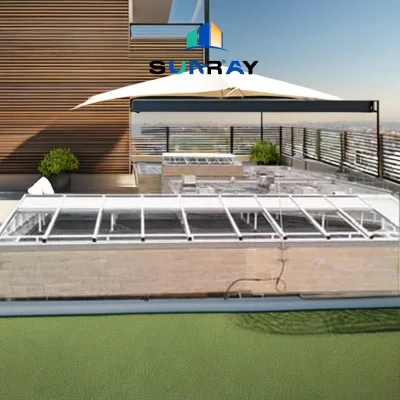
Customized laminate glass retractable roofs are designed for a wide array of building applications, ranging from residential patios to commercial atriums and industrial facilities. The primary function is to provide a sunshade and waterproof roof, offering protection from the elements while maintaining an open-air feel when retracted. The "Flat Roof" style and "Flat" appearance suggest suitability for modern architectural designs that require seamless integration with existing building envelopes. The usage categories listed include building, furniture, doors, and windows, indicating the versatility of the laminated glass technology.
In terms of performance, the system is engineered for weather resistance and insulation. The fireproof attribute of the laminated glass makes it suitable for applications where fire safety is a regulatory requirement. The solid structure and dry laminated glass technique ensure that the roof remains intact and safe even under extreme conditions. The waterproofing feature is critical for outdoor applications, though the specific waterproof index should be verified against local rainfall expectations. The installation flexibility allows for integration into various building types, whether as a standalone pergola or as a retrofit to an existing wall. The ability to customize the color and structure allows architects to match the aesthetic of the building, while the motorized operation provides convenience for users to adjust the roof based on weather conditions or sunlight intensity.
Supplier Evaluation and R&D Capabilities
Selecting the right supplier requires a thorough evaluation of their technical capabilities and production flexibility. The data indicates that suppliers possess R&D capacity for OEM, ODM, and own-brand services. This suggests that suppliers can not only manufacture to existing designs but also collaborate with buyers to develop custom solutions. When evaluating a supplier, buyers should assess their ability to handle the "Customized" nature of the product, including the ability to produce specific sizes and thicknesses of laminated glass. The surface treatment is also listed as customizable, which is a key indicator of a supplier's ability to meet specific aesthetic or functional requirements.
The production location is noted as China, with a specific mention of Guangdong China. This region is a major hub for manufacturing aluminum profiles and glass products, offering a robust supply chain. However, buyers must verify the specific factory location to ensure it aligns with their logistical and quality expectations. The supplier's ability to provide a range of certifications, such as SGS and CE, is a strong indicator of their commitment to quality and compliance. Buyers should also inquire about the supplier's experience with the specific "prod_model" numbers observed, such as "Y" or "02," to gauge their familiarity with different product lines. The presence of a wide range of optional add-ons suggests a comprehensive product ecosystem, which can simplify the procurement process by sourcing all components from a single source.
Quality Control and Long-Term Procurement Considerations
Ensuring the quality of customized laminate glass retractable roofs requires a rigorous quality control (QC) process that extends beyond the initial purchase. The production technique of dry laminated glass must be verified to ensure there are no bubbles, delamination, or inconsistencies in the intermediate film. The thickness range of 6mm to 60mm requires precise measurement and testing to ensure the glass meets the specified structural requirements. The surface treatment of the aluminum alloy must be checked for uniformity and durability, especially in environments with high humidity or salt exposure.
For long-term procurement, buyers should consider the maintenance requirements of the motorized system and the glass panels. The remote control switch and motor control system should be tested for reliability and ease of use. The waterproofing capabilities must be re-verified periodically to ensure that seals and gaskets have not degraded over time. The supplier's ability to provide spare parts, such as motors, gears, or replacement glass panels, is crucial for the longevity of the installation. The packaging method, whether wooden crates or shipping cartons, should be evaluated for its ability to protect the glass during transit, as damaged glass is a significant risk in this category. Finally, buyers should establish clear communication channels with the supplier for after-sales support, ensuring that any issues with installation or performance can be addressed promptly. By focusing on these technical and logistical aspects, buyers can secure a high-quality, durable solution that meets their specific project needs.
FAQs
What materials are used for the frame and glass?
The frame typically uses 6063-T5 aluminum alloy, while the glazing consists of laminated glass with thicknesses from 6mm to 60mm. This combination ensures structural integrity and safety for building applications.
How is the roof controlled and installed?
The system operates via motor control using a remote control switch. It supports multiple installation methods including freestanding, wall-mounted, wall-hanging, and semi-attach configurations for versatile placement.
Which certifications validate the product safety?
Products often carry SGS, B1, and CE certifications to ensure compliance with safety and quality standards. The B1 rating specifically indicates fire resistance suitable for building and furniture applications.
Can the size and color be customized?
Yes, customized sizes and colors are available to meet specific architectural requirements. The structure color can be grey, white, or customized, and the glass thickness ranges from 6mm to 60mm.
What is the minimum order quantity for purchase?
The minimum order quantity ranges from 1 to 500 units depending on the specific product configuration. Larger orders may secure better rates, but small batches are also accepted for testing.
How is the product packed for shipping?
Packaging options include wooden boxes, shipping cartons with plastic bags, or wooden crates for heavy glass panels. The specific packing method is often customized based on the order requirements.
Where are these products manufactured?
The products originate from China, with a specific manufacturing hub noted in Guangdong. This region provides a robust supply chain for aluminum profiles and glass processing.